
Why Your Driver Keeps Turning Over (Hooking Left) and What the Shaft Is Doing
Why Your Driver Keeps Turning Over Left
If your driver keeps turning over and diving left, the clubface is closing too fast through impact. That can come from your swing. But it can also come from the shaft.
When a shaft is too soft for your swing speed or transition, it can over-release. The tip section kicks forward, the face shuts down, and the ball starts left or turns left hard. Stronger players feel this as the head “flipping” or losing stability.
Weight and torque also matter. A lighter shaft or higher torque model can make the club feel loose during transition. That can increase face rotation and make timing inconsistent.
If you are swinging 100+ mph and fighting a hook, there is a real chance your shaft profile is not stable enough for how you load it.
Now let’s break down the real causes behind a driver that keeps turning over.
The 3 Main Causes of a Driver That Hooks
A driver that keeps turning over usually comes from one of three things.
First is face angle. If the face is closed at impact, the ball starts left. If it is closed to the path, it curves even more left. This is the most common cause.
Second is path. An in-to-out path combined with a closed face will produce a strong draw or hook. Many stronger players create this pattern without realizing it.
Third is equipment. If the shaft is too soft, too light, or too high in torque for your swing speed and transition, it can accelerate face closure. The club feels like it “releases itself.” That timing can turn a small draw into a snap hook.
The key is identifying which one is actually happening. Guessing leads to the wrong fix.

How Shaft Flex Influences Face Closure
Shaft flex affects how the clubhead returns to the ball.
If the shaft is too soft for your swing speed or transition, it will bend more during the downswing. As it unloads, the tip section kicks forward and the clubhead can rotate closed faster than expected. That is when players say the club feels like it “flips” left.

This is common with stronger transitions. A player swinging 105 to 110 mph with an aggressive move from the top can overpower a standard stiff shaft. The result is inconsistent face control and left misses.
Moving into a firmer profile can slow down face closure and improve timing. That does not always mean jumping to X flex. It means matching flex to how you load the shaft.
If the face feels unstable through impact, flex is one of the first places to look.
How Shaft Weight and Torque Affect Left Misses
Weight and torque both influence how stable the club feels during transition.
A lighter shaft can increase clubhead speed. But for stronger players, it can also make timing harder. If the club feels too light, you may release it early. That can shut the face down and send the ball left.
Torque measures how much the shaft twists during the swing. Higher torque shafts twist more. For smoother swings, that can feel fine. For aggressive transitions, higher torque can make the face feel loose through impact.

If you swing 100+ mph and fight a hook, a heavier shaft or a lower torque profile often improves face stability. The club feels more connected. The release becomes more predictable.
Weight and torque are not small details. They directly affect dispersion.
Signs Your Shaft Is Too Soft for Your Swing Speed
There are clear signs your shaft may be part of the problem.
You swing over 100 mph and the ball starts left even when the strike feels solid. That is one clue.
You feel the clubhead “flip” through impact. The release feels quick or hard to control. That is another.
Your misses are mostly left, not right. And when you try to hold the face open, you lose distance or block it.
You may also notice that your good swings go too high with too much spin. Softer profiles can add dynamic loft and increase face closure at the same time.
If these patterns show up consistently, it is not random. The shaft profile may not match how you load it.
What Type of Shaft Profile Helps Reduce Hooks
If you fight a left miss, you usually need more tip stability and better face control.
Low launch, low spin profiles with firmer tip sections tend to slow down face closure. These shafts feel tighter through transition and more stable at impact. Stronger players often describe them as more “connected.”
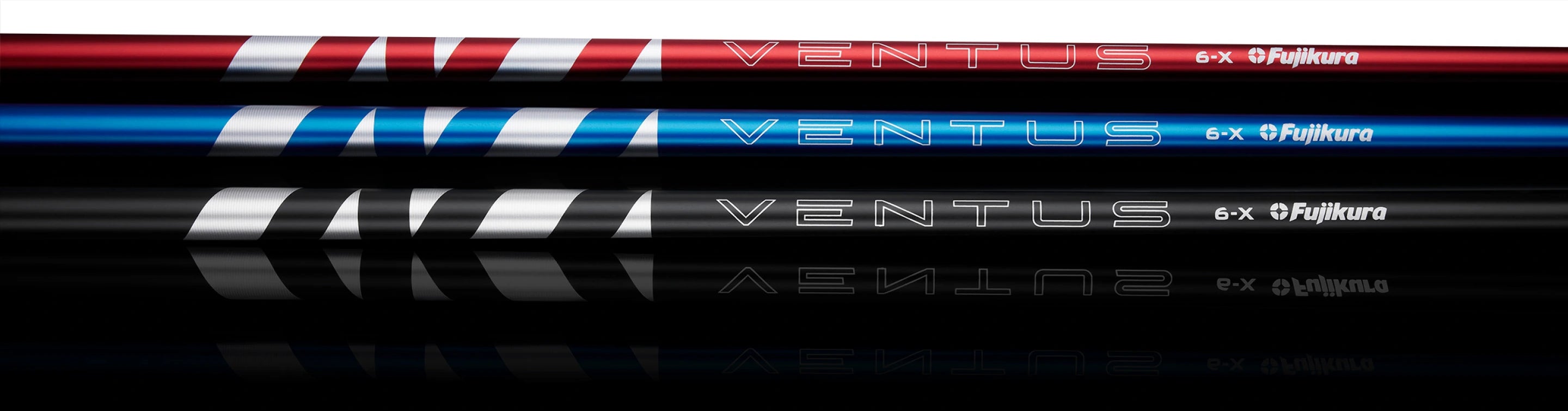
Examples of this type of profile include Fujikura Ventus Black, Mitsubishi Tensei 1K Pro White, and Graphite Design Tour AD XC. These are built for players with faster swing speeds or aggressive transitions who need to control launch and dispersion.
Heavier weights and lower torque options inside those lines can add even more stability.
The goal is not to chase the stiffest shaft possible. The goal is to match the profile to your swing speed and transition so the face returns square more consistently.
When It’s Your Swing vs When It’s the Shaft
Not every hook is a shaft problem.
If your path is severely in to out and the face is dramatically closed, that is a swing issue first. No shaft will fix a face that is 5 degrees shut at impact.
But if your path numbers are reasonable and your contact is solid, yet the ball still turns over too much, equipment becomes more likely. Especially if the miss gets worse when you swing harder.
A simple test is this: if you can hit controlled fades with your irons but cannot keep the driver from flipping left, that points toward the shaft profile. Drivers magnify timing issues more than irons do.
The key is separating mechanics from stability. Fix the swing when it is clearly mechanical. Adjust the shaft when the face feels unstable.
How to Choose the Right Shaft to Stop the Left Miss
Start with swing speed.
If you are under 95 mph, a hook is rarely caused by the shaft alone. Look at face control first.
If you are 100 mph or higher and have an aggressive transition, you likely need more stability. That can mean a firmer flex, a heavier weight, or a lower torque profile.
Next, evaluate launch and spin. If your driver is launching high and spinning too much while also missing left, that is another signal the profile may be too soft in the tip.
Do not blindly jump to X flex. Look at the overall profile. A stiff shaft with a firm tip can control left misses better than a soft-tipped X flex.
Match flex, weight, and torque to your swing speed and transition. If you are unsure where to start, read our complete shaft flex guide.