
Why Your Driver Is Spinning Too Much (And How the Right Shaft Fixes It)
What Causes Too Much Spin With a Driver?
If your driver is spinning too much, you are likely losing distance and fighting a high, weak ball flight.
Excess spin usually comes from one of three things. You are adding dynamic loft at impact. You are striking the ball low on the face. Or your shaft is not stable enough for your swing speed and tempo.
For most serious players, excess spin shows up as ballooning shots that climb quickly and fall straight down. Carry might look fine, but rollout disappears. Into the wind, it gets worse.
Optimal driver spin for most players falls between 2,000 and 2,700 RPM depending on swing speed. If you are spinning it above 3,000 RPM, you are leaving distance on the table.
The shaft plays a bigger role than most golfers realize. A profile that is too soft in the tip or too light for your transition can add dynamic loft and increase spin at impact.
How to Tell If Your Driver Spin Is Too High
You do not need a launch monitor to suspect high spin.
Look at ball flight first. If your drives launch high, climb quickly, and seem to stall at the top before falling straight down, that is usually excess spin. Into the wind, the ball will look like it floats and loses power.

Distance is another clue. If your carry seems decent but you get very little rollout, spin is likely too high. A properly fit driver should produce a strong, penetrating flight that lands and releases.
On a launch monitor, here is what to watch:
• Spin above 3,000 RPM for most players
• Peak height that is noticeably higher than players with similar speed
• Smash factor is fine, but total distance underperforms
If your swing speed is 100 mph or higher and you are spinning it over 3,000 RPM, there is almost always a fitting issue involved.
Ideal Driver Spin by Swing Speed
Spin is not one number for everyone. It depends on swing speed.

If you swing under 90 mph, you may need 2,800 to 3,200 RPM to keep the ball in the air long enough. Too little spin at that speed can actually hurt carry.
Between 90 and 100 mph, most players perform best between 2,400 and 2,800 RPM.
From 100 to 110 mph, the optimal window usually tightens to 2,100 to 2,600 RPM.
Above 110 mph, many players see maximum distance between 1,800 and 2,300 RPM depending on launch angle.
When spin creeps 400 to 600 RPM above your ideal range, distance drops fast. The ball climbs, stalls, and falls steep.
The key point is this. Spin must match speed. If your shaft profile is adding spin beyond your speed window, it is costing you distance.
Why the Wrong Shaft Increases Spin
The shaft controls how the clubhead delivers at impact.
If the shaft is too soft for your swing speed or transition, it can add dynamic loft. That means the head arrives with more loft than intended, which increases launch and spin.
A tip section that is too soft can also kick forward too much. That forward bend adds spin, especially for players with aggressive transitions.
Weight matters too. If the shaft is too light, many players lose control of the clubhead. That often leads to inconsistent strike and added spin, especially on low-face contact.
Torque plays a smaller but real role. Higher torque shafts can feel smoother, but for stronger players they can allow more twisting at impact, which can add spin and reduce stability.
If you are spinning the driver too much and your strike is decent, the shaft profile is often the missing piece.
If you are unsure whether your current flex matches your swing speed, start with our complete shaft flex guide before changing profiles.
How Shaft Weight, Flex, and Torque Affect Spin

Weight:
Heavier shafts tend to lower spin for a lot of players because they improve control and strike location. Better center or slightly high-face contact usually drops spin. Too light often leads to timing issues, low-face strikes, and extra spin.
Flex:
Flex affects spin mostly through how much loft you add at impact. If the shaft is too soft for your speed or transition, it can kick forward and add dynamic loft, raising spin. Too stiff can do the opposite, but it can also cause low launch and poor strike if you cannot load it.
Torque:
Torque is how much the shaft twists. Higher torque can feel smoother, but for faster or more aggressive players it can allow more face movement and less stability through impact. That can raise spin and dispersion. Lower torque usually feels tighter and can help reduce spin for stronger swings, especially when combined with a firmer tip.
Rule of thumb: when spin is too high, you usually need more stability, not just “stiffer.”
Low-Spin Shaft Profiles That Actually Work
Low spin shafts are typically firmer in the tip and mid section. They reduce forward bend at impact and help control dynamic loft.
For players above 100 mph, tip-stiff profiles often bring spin down fast without killing launch. That is the key. You want lower spin without turning your flight into a low bullet that falls out of the air.
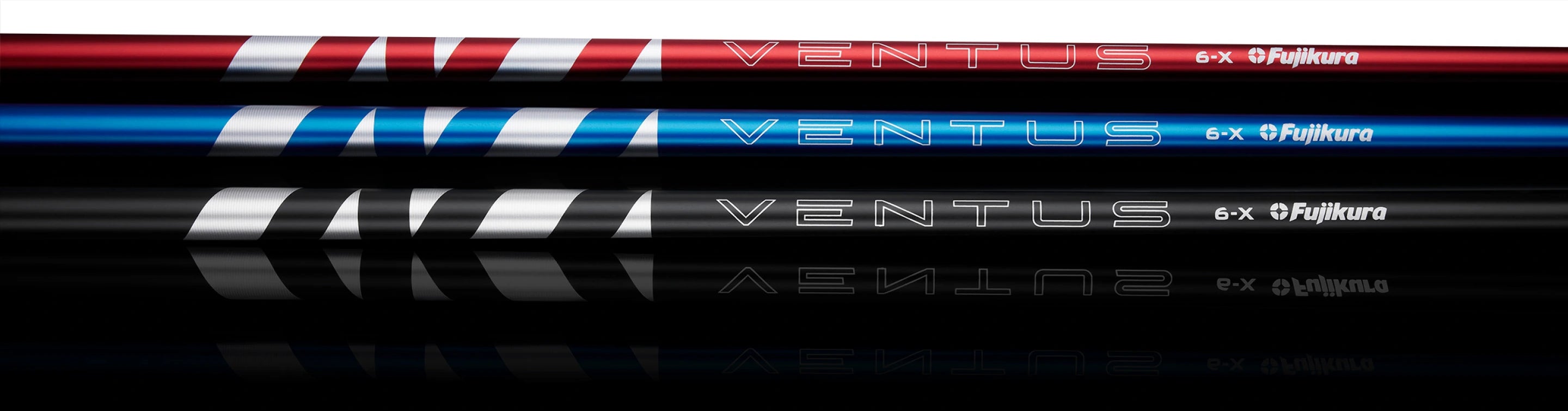
Profiles like Ventus Black, Tensei 1K Pro White, and Tour AD XC are designed to control tip stability and reduce spin for stronger transitions.
Heavier shafts can also help. Moving from a 55g shaft to a 65g or 70g profile often improves strike consistency and tightens spin for stronger players.
Flex must match tempo. A smooth 102 mph player may not need X flex. But a hard loader at 98 mph might.
The goal is simple. Stable feel. Controlled tip section. Strike higher on the face. Spin drops naturally when those variables line up.
When It’s Not the Shaft (Loft, Strike, or Head Design)
The shaft is important. But it is not magic.
If you are striking the ball low on the face, spin will jump no matter what shaft you use. Low-face contact increases spin through gear effect. That alone can add several hundred RPM.
Loft matters too. If you are playing 10.5 degrees but delivering it with even more dynamic loft, spin will climb. Some players simply need less loft.
Head design plays a role. Some driver heads are built for forgiveness and higher launch. Others are designed to reduce spin. If you are using a high-spin head with a soft shaft, the problem compounds.
Before changing shafts, confirm three things:
• Strike location is center to slightly high
• Loft matches your launch needs
• Head is not a high-spin model
If those are correct and spin is still high, then the shaft becomes the lever.
Driver Spin Frequently Asked Questions
What driver spin rate is too high?
For most golfers, driver spin above 3,000 RPM is too high.
If you swing under 90 mph, you may need closer to 2,800 to 3,000 RPM to maximize carry. But once you move past 95 to 100 mph, optimal spin usually falls between 2,100 and 2,700 RPM.
If you are swinging 100 mph or more and spinning it over 3,000 RPM, you are likely losing total distance. The ball will launch high, climb quickly, and fall steep with little rollout.
The only way to know for sure is to test on a launch monitor. But ballooning ball flight and weak rollout are strong signs your spin is too high.
Can a driver shaft really lower spin?
Yes, but only if the shaft is the actual problem.
A shaft cannot fix poor strike or too much loft. But if your current shaft is too soft, too light, or too unstable for your swing, it can absolutely add spin.
A tip-stiff profile can reduce forward bend at impact. That lowers dynamic loft and helps control spin. Moving into the correct weight can also improve strike consistency, which naturally brings spin down.
Most players see spin changes in the range of 200 to 500 RPM when switching into a better-fit shaft. For faster swings, the difference can be even larger.
The key is matching the shaft to swing speed and transition, not just grabbing a lower-spin model blindly.
Should I switch to X flex to reduce spin?
Not automatically.
X flex is not a spin setting. It is a stiffness rating. If your swing speed and transition justify it, X flex can help reduce excess spin by controlling dynamic loft and stabilizing the tip section.
But many golfers jump to X flex when the real issue is strike location or loft. If you cannot properly load the shaft, you may lose ball speed and actually hurt performance.
A smooth 100 mph player may perform better in a stable stiff profile. A hard loader at 98 mph might benefit from X flex. It depends on tempo and transition, not just raw speed.
Flex should match how you swing, not your ego.